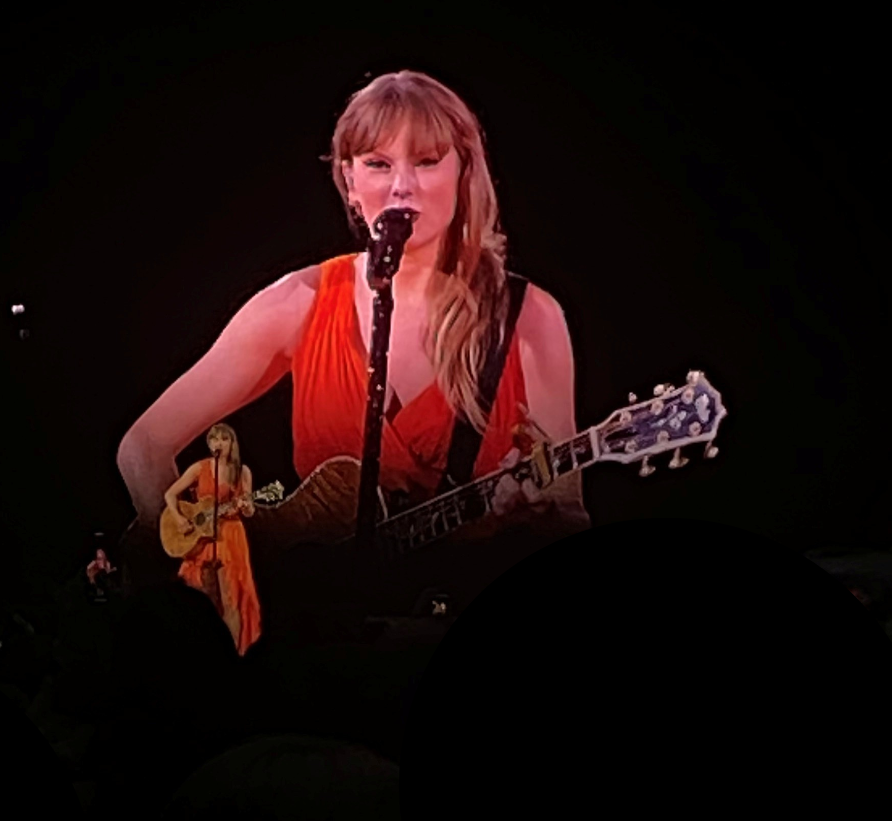


Protection in the age of AI: Why Taylor Swift wants to register her voice and image as a trademark
29 April 2026Taylor Swift has taken a striking step: she aims to register her voice and likeness as trademarks. This is not a publicity stunt, but a smart legal response to the rapid rise of AI. With today’s technology, it has become easy to convincingly replicate someone’s voice or face. Think of deepfakes, cloned voices in commercials, or fake endorsements. AI enables the copying of a person’s identity, and the monetization of it. It is therefore only logical that individuals seek stronger legal protection for that identity.
By registering elements of her identity as trademarks, such as an iconic stage photo and recognizable audio fragments, Taylor Swift is trying to gain control over how her image is used. If successful, she would be able to act not only against exact copies, but also against imitations that closely resemble her. This is what makes trademark law particularly interesting in the context of AI applications, where imitation is often subtle but still capitalizes on a person’s fame and appeal.
The question of whether a face can function as a trademark arises frequently. The short answer: yes, it can. An image of a face is often recognizable and can therefore possess distinctiveness. Portrait marks have been applied for and succesfully registered for some time. Consider well-known Dutch faces such as Doutzen Kroes®, Romee Strijd® and Mikky Kiemeney®. This has also been confirmed in practice. For example, the trademark application of Maartje Verhoef® was initially refused, but ultimately allowed on appeal. This approach has since been upheld in multiple cases, see our previous article: , zie ons eerdere artikel: Another win for portrait trademarks. An image of a face can therefore indeed function as a trademark.
It is no coincidence that trademark law is being considered here. Other legal frameworks, such as copyright and portrait rights, do not always provide sufficient protection. Trademark law goes further: it protects not only against copies, but also against confusion. It also often makes enforcement against misuse significantly easier. Moreover, a trademark legally secures the reputation, goodwill, and recognizability that have been built up. In doing so, it protects not only identity, but also the economic value attached to it.
This is not just relevant for global superstars, musicians dj's, fashion models and football players . In an era where personal branding is increasingly important, it matters to a much broader group. Think of content creators, influencers, entrepreneurs, and coaches. Anyone positioning themselves as a “brand” builds recognizability, and that recognizability can be imitated or misused, especially with the help of AI.
Want to prevent others from exploiting your name or likeness? Then now is the time to protect your brand.
We are happy to assist you in registering your (portrait) trademark. Feel free to get in touch.